
Saka Dawa, Vesak Day and Buddha Jayanti: Understanding Their Historical, Cultural, and Calendar Differences
Saka Dawa, Buddha Jayanti, and Vesak are among the most sacred Buddhist observances in the world. Although they are celebrated under different names across different Buddhist cultures and traditions, they all honor the birth, enlightenment, and parinirvana of Gautama Buddha. Over more than 2,570 years, as Buddhism spread from the sacred birthplace of the Buddha in Lumbini into South Asia, East Asia, Tibet, the Himalayan regions, and eventually the modern West, these observances gradually evolved according to different historical, cultural, philosophical, and calendrical traditions.
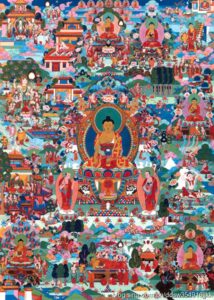
Today, many people notice that Buddha Jayanti and Saka Dawa sometimes fall on the same day, while in other years they appear several weeks apart. This difference often creates confusion, especially among younger generations and Buddhist communities living outside Asia. Understanding this requires examining the historical spread of Buddhism itself, the evolution of Buddhist calendars, and the distinct cultural developments within Theravada, Mahayana, and Vajrayana Buddhist traditions.
Buddhism originated in Nepal during the 5th century BCE through the teachings of Siddhartha Gautama, later known as the Buddha. After attaining enlightenment in Bodh Gaya and teaching across the Gangetic plains for nearly forty five years, the Buddha’s teachings gradually spread throughout Asia. Following the reign of Ashoka in the 3rd century BCE, Buddhism expanded rapidly into Sri Lanka and later throughout Southeast Asia.


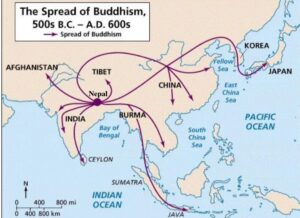
In countries such as Sri Lanka, Thailand, Myanmar, Cambodia, and Laos, Buddhism developed primarily through the Theravada tradition. These regions preserved the Pali Canon and established Vesak or Buddha Jayanti as the principal annual celebration commemorating the Buddha’s birth, enlightenment, and passing away. Traditionally, Vesak is observed on the full moon day of the lunar month corresponding to Vesakha, generally falling in April or May according to regional lunisolar calendars.
As Buddhism spread northward into China beginning around the first century CE, it encountered deeply rooted philosophical traditions such as Taoism and Confucianism. Through centuries of interaction, Buddhism gradually transformed into uniquely East Asian forms such as Chan Buddhism in China, Zen Buddhism in Japan, Seon Buddhism in South Korea, and Thiền Buddhism in Vietnam. Although these traditions developed distinct philosophies and meditation methods, the remembrance of the Buddha’s life and enlightenment remained central to their spiritual culture.
The historical roots of Saka Dawa emerged later through the transmission of Mahayana and Vajrayana Buddhism into Tibet between the 7th and 11th centuries. During this period, Indian Buddhist scholars and masters such as Padmasambhava and Shantarakshita helped establish Buddhism within Tibetan society. Tibetan Buddhism gradually integrated Indian Buddhist philosophy with local Himalayan culture, pilgrimage traditions, ritual systems, and Tibetan astronomy and astrology.
Over time, the fourth lunar month of the Tibetan calendar became regarded as the holiest month of the year because Tibetan Buddhist traditions associated it with the Buddha’s birth, enlightenment, and parinirvana. This sacred month eventually became known as Saka Dawa or Saga Dawa.
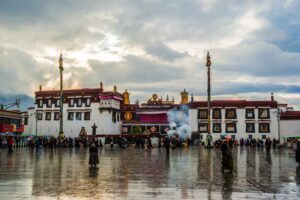
Historically, Saka Dawa became deeply connected to pilgrimage culture across Tibet and the Himalayan world. Thousands of devotees traveled to sacred Buddhist sites such as Jokhang Temple and Mount Kailash during the sacred month. Pilgrims circumambulated monasteries, stupas, temples, and sacred mountains while reciting mantras and prayers. Some performed full body prostrations over long distances as acts of devotion, humility, and purification.
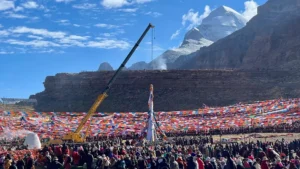
One of the most important ceremonies associated with Saka Dawa is the raising of the great prayer flag pole near Mount Kailash during Saga Dawa Düchen, the full moon day considered the holiest moment of the month. Thousands gather for communal prayers, offerings, and rituals dedicated to compassion, peace, and the well-being of all sentient beings.
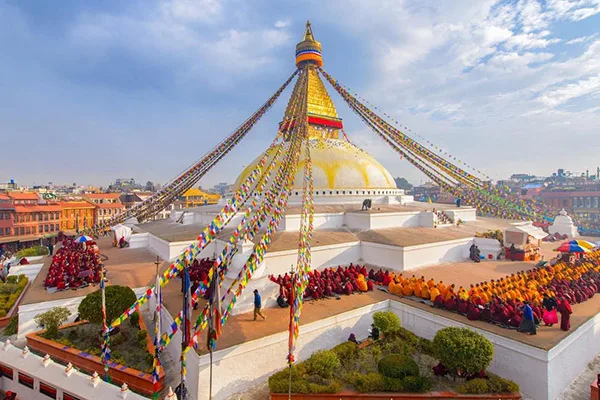
In Nepal, thousands of people perform kora, or ritual circumambulation, around Boudhanath, Swayambhunath, monasteries, temples, and other Buddhist pilgrimage sites throughout the month of Saka Dawa. Devotees gather from early morning until late at night, turning prayer wheels, offering butter lamps, reciting mantras, and engaging in acts of generosity and prayer. The atmosphere around these sacred places becomes deeply spiritual, reflecting both personal devotion and collective cultural continuity.
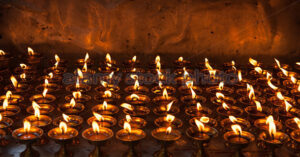
In Tibetan Buddhist belief, the karmic consequences of actions performed during Saka Dawa are believed to be multiplied many thousands or even millions of times. Because of this belief, practitioners intensify spiritual and ethical practices throughout the month. Many devotees observe fasting practices, including Nyungne, a traditional Vajrayana fasting and purification retreat involving silence, prayer, prostrations, meditation, and restricted food intake. Some practitioners eat only one vegetarian meal a day, while others undertake complete fasting on sacred days.
Vegetarianism becomes especially important during Saka Dawa. Many people avoid meat entirely throughout the month as an expression of compassion and nonviolence toward animals. In Himalayan Buddhist communities, the reduction of harm toward all living beings is considered one of the highest ways to honor the Buddha during this sacred period.
Acts of generosity and compassion also become central practices during Saka Dawa. People donate food, clothing, money, medicine, and offerings to monasteries, monks, the poor, and those in need. Many devotees release captive animals, offer butter lamps, sponsor prayers, recite sacred texts, chant mantras such as “Om Mani Padme Hum,” and dedicate merit for world peace and the well-being of all sentient beings.
Unlike many modern festivals centered mainly on entertainment or public celebration, Saka Dawa remains deeply connected to inner transformation, ethical awareness, mindfulness, simplicity, and compassion. For many practitioners, the month becomes a time to reduce harmful actions, purify negative habits, cultivate patience and generosity, and reflect deeply on impermanence and interconnectedness.
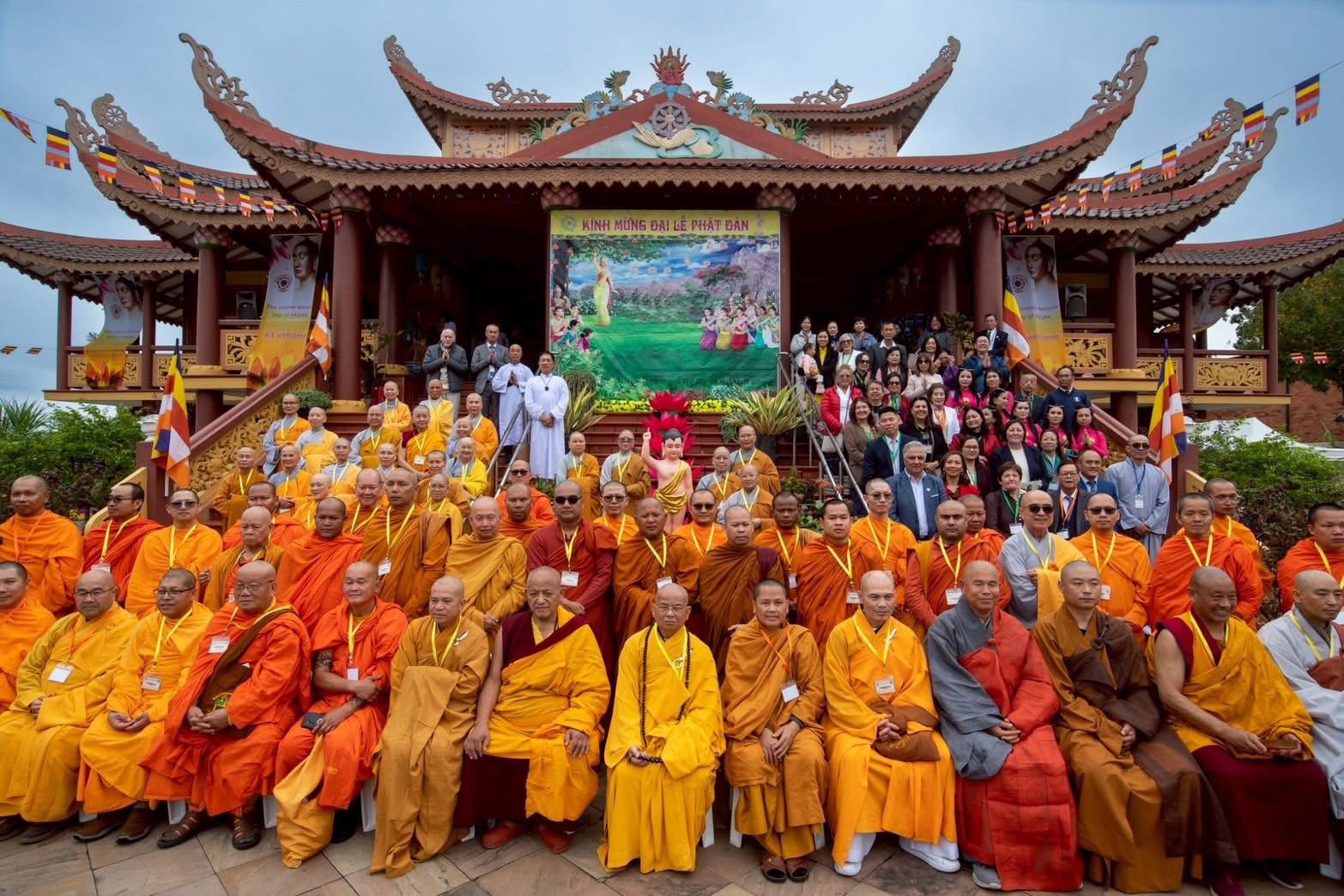
By contrast, Buddha Jayanti or Vesak in South and Southeast Asian Buddhist cultures generally remained more focused on the sacred full moon day itself rather than a month long observance. In Nepal and India, Buddha Jayanti became strongly connected to the commemoration of the Buddha’s birth in Lumbini. Public celebrations often include temple visits, prayer ceremonies, teachings, processions, meditation gatherings, charitable activities, and the lighting of butter lamps and candles.
One of the major questions surrounding Saka Dawa concerns why its dates often differ from Buddha Jayanti or Vesak. The answer lies primarily in the complexity of Buddhist calendar systems.
Most Theravada Buddhist countries follow South Asian lunisolar calendar systems derived from ancient Indian astronomical traditions. These calendars calculate sacred observances according to lunar months associated with the month of Vesakha.
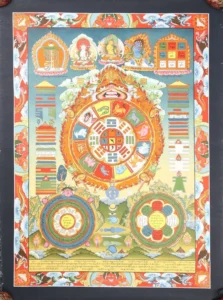
Tibetan Buddhism, however, follows the Tibetan lunisolar calendar, which developed through a combination of Indian Buddhist astronomy, Chinese calendrical science, and indigenous Tibetan astrological traditions. Unlike the Gregorian solar calendar used internationally today, the Tibetan calendar tracks both lunar cycles and solar movements simultaneously.
A lunar year is approximately eleven days shorter than a solar year. Without adjustments, lunar months would gradually drift away from seasonal cycles. To prevent this, the Tibetan calendar periodically inserts leap months, known as intercalary months, to maintain alignment between lunar and solar cycles.
Tibetan calendrical calculations are especially complex because they incorporate astronomical formulas connected to planetary movements, zodiac systems, lunar mansions, and traditional Buddhist cosmology derived largely from the Kalachakra Tantra. Because of these calculations, certain months and days in the Tibetan calendar may occasionally be repeated, skipped, or adjusted differently compared to South Asian Buddhist calendars.
As a result, Saka Dawa and Buddha Jayanti sometimes fall on the same Gregorian calendar date, while in other years Saka Dawa may occur several weeks or nearly a month later. This difference does not reflect disagreement regarding the Buddha’s life events. Rather, it reflects centuries of independent calendrical evolution within different Buddhist civilizations.
Another important historical distinction is that in some Tibetan traditions, the Buddha’s birth is commemorated separately on the seventh day of the fourth lunar month, while Saga Dawa Düchen on the fifteenth day primarily emphasizes enlightenment and parinirvana. Over time, however, many Tibetan Buddhist communities came to collectively associate all three sacred events with the broader Saga Dawa observance itself.
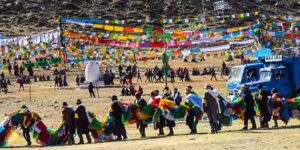
Today, Saka Dawa continues to hold enormous spiritual importance throughout Tibet, Bhutan, Mongolia, Nepal’s Himalayan regions, Ladakh, Sikkim, and Tibetan Buddhist communities around the world. Similarly, Buddha Jayanti and Vesak remain among the most important Buddhist observances throughout South and Southeast Asia.
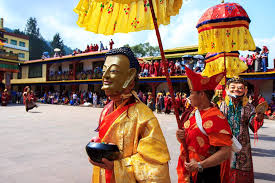
Despite their cultural, historical, and calendrical differences, Saka Dawa, Vesak, and Buddha Jayanti ultimately point toward the same spiritual foundation: remembrance of the Buddha’s awakening and the cultivation of wisdom, compassion, mindfulness, ethical responsibility, and awareness of the interconnectedness of all life.
Perhaps this shared essence explains why Buddhism has survived and evolved across so many civilizations for more than two millennia. Although languages, rituals, calendars, and cultural expressions changed across regions and centuries, the central teachings of compassion, awareness, nonviolence, and liberation from suffering remained remarkably consistent. In this sense, Saka Dawa and Buddha Jayanti are not separate celebrations competing with one another, but different historical and cultural expressions of the same universal Buddhist heritage.